At Evolta Electric, we often speak with homeowners and businesses across Ottawa who are curious about the different types of EV chargers. Choosing the right charging system can make a significant difference in how you use your electric vehicle and how easily it fits into your daily life.
There are three primary types of EV chargers: Level 1, Level 2, and Level 3. Each one serves a unique purpose, with different power levels, speeds, and installation requirements. In this guide, we’ll explain how they work, what they’re best suited for, and how to decide which one makes sense for your home or property.
Level 1 EV Chargers: The Basic Option
Level 1 chargers use a standard 120-volt household outlet. Most electric vehicles come with a Level 1 charging cable, which means you can plug in right away without any additional equipment or upgrades.
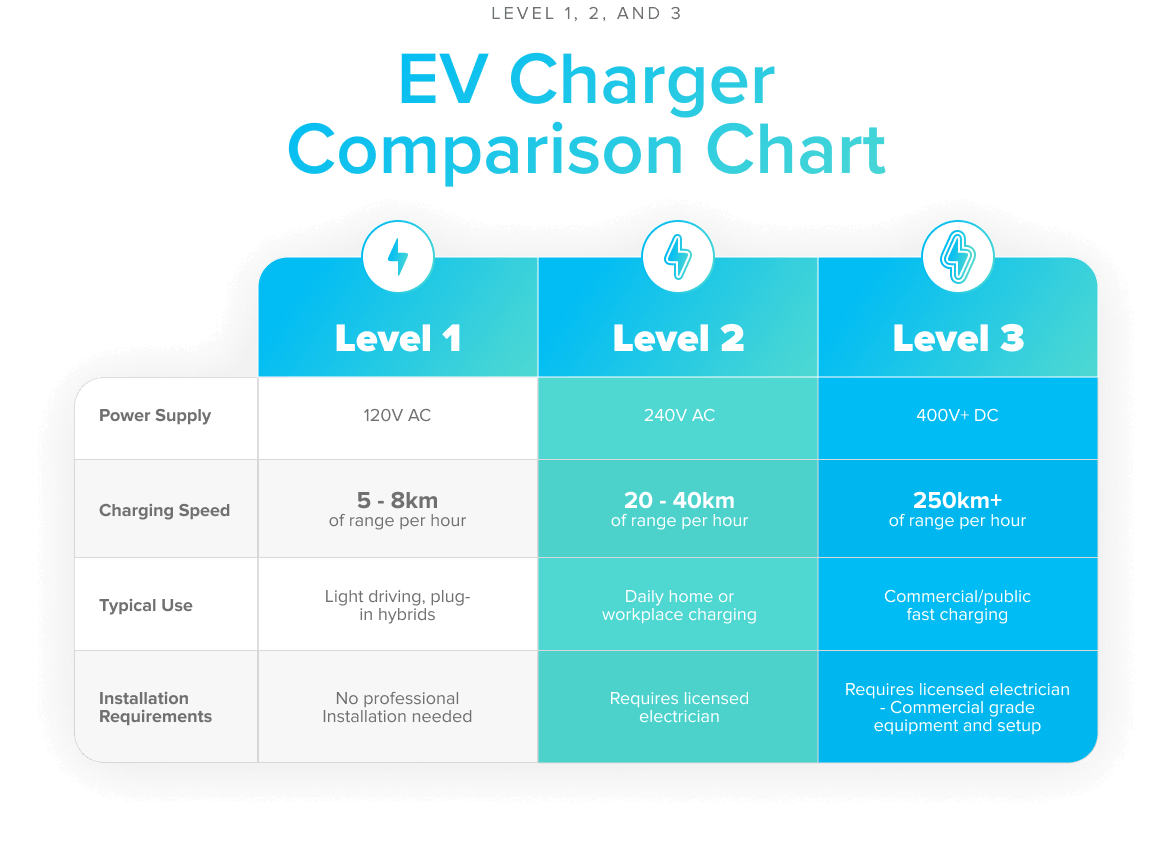
The trade-off with this convenience is speed. A Level 1 charger adds about 5-8 kilometres of range per hour. That means charging a fully electric vehicle can take over 24 hours, depending on the battery size. For plug-in hybrids or vehicles with smaller batteries, Level 1 may be sufficient.
This option is best for:
- Low-mileage drivers
- Plug-in hybrids
- Occasional or emergency use
However, charging performance can decrease in cold weather. We’ve seen this especially in Ottawa during the winter months, when lower temperatures reduce battery efficiency. For this reason, most customers consider Level 1 a short-term solution or a backup option.
Level 2 EV Chargers: The Everyday Solution
For most homeowners, Level 2 chargers provide the right balance of speed and practicality. These systems operate on a 240-volt circuit, similar to what is used for electric dryers or stoves. Because of the higher voltage, Level 2 chargers offer a significant improvement in charging times—typically adding 20 to 40 kilometres of range per hour.
This means most electric vehicles can fully charge overnight, making Level 2 ideal for daily use.
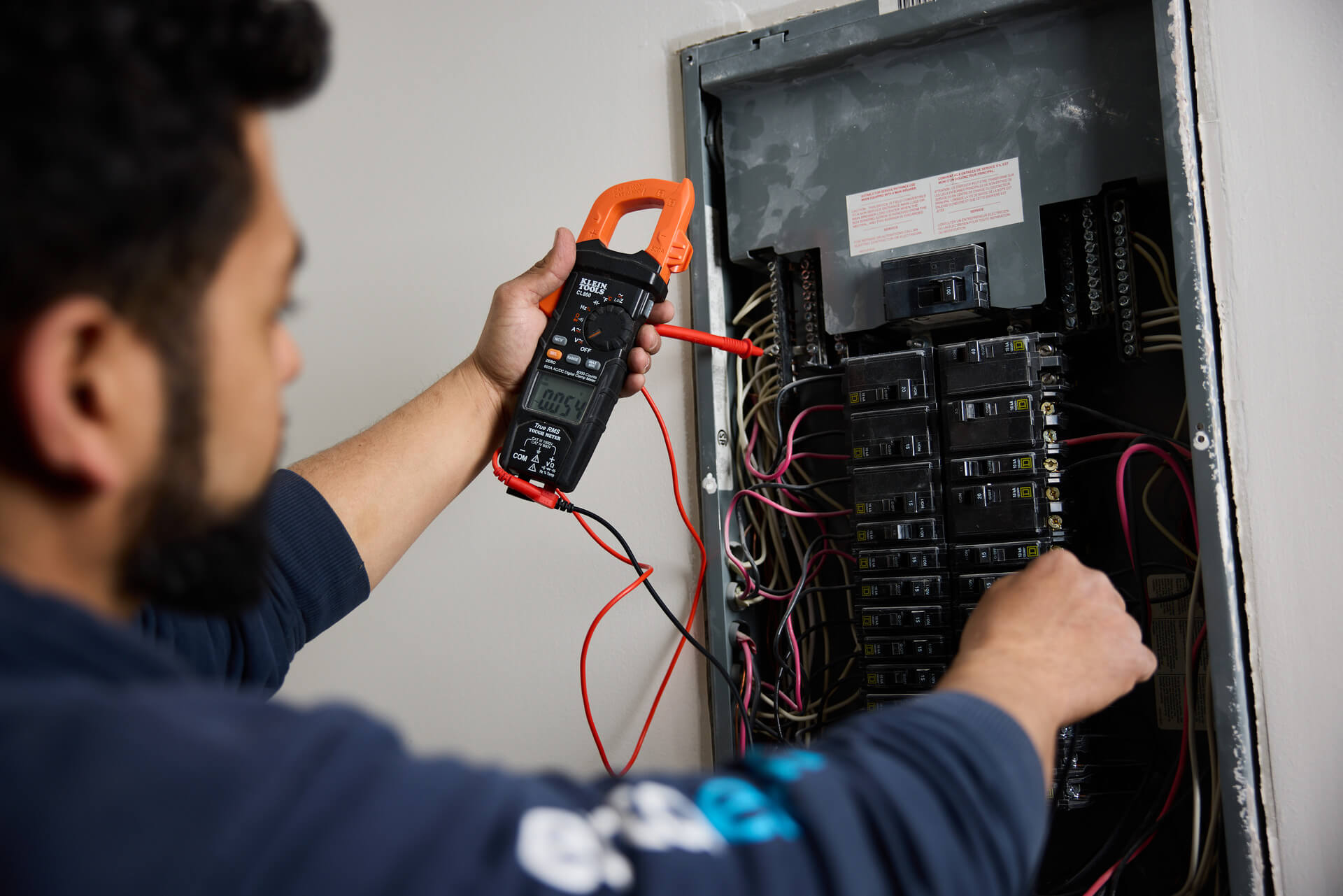
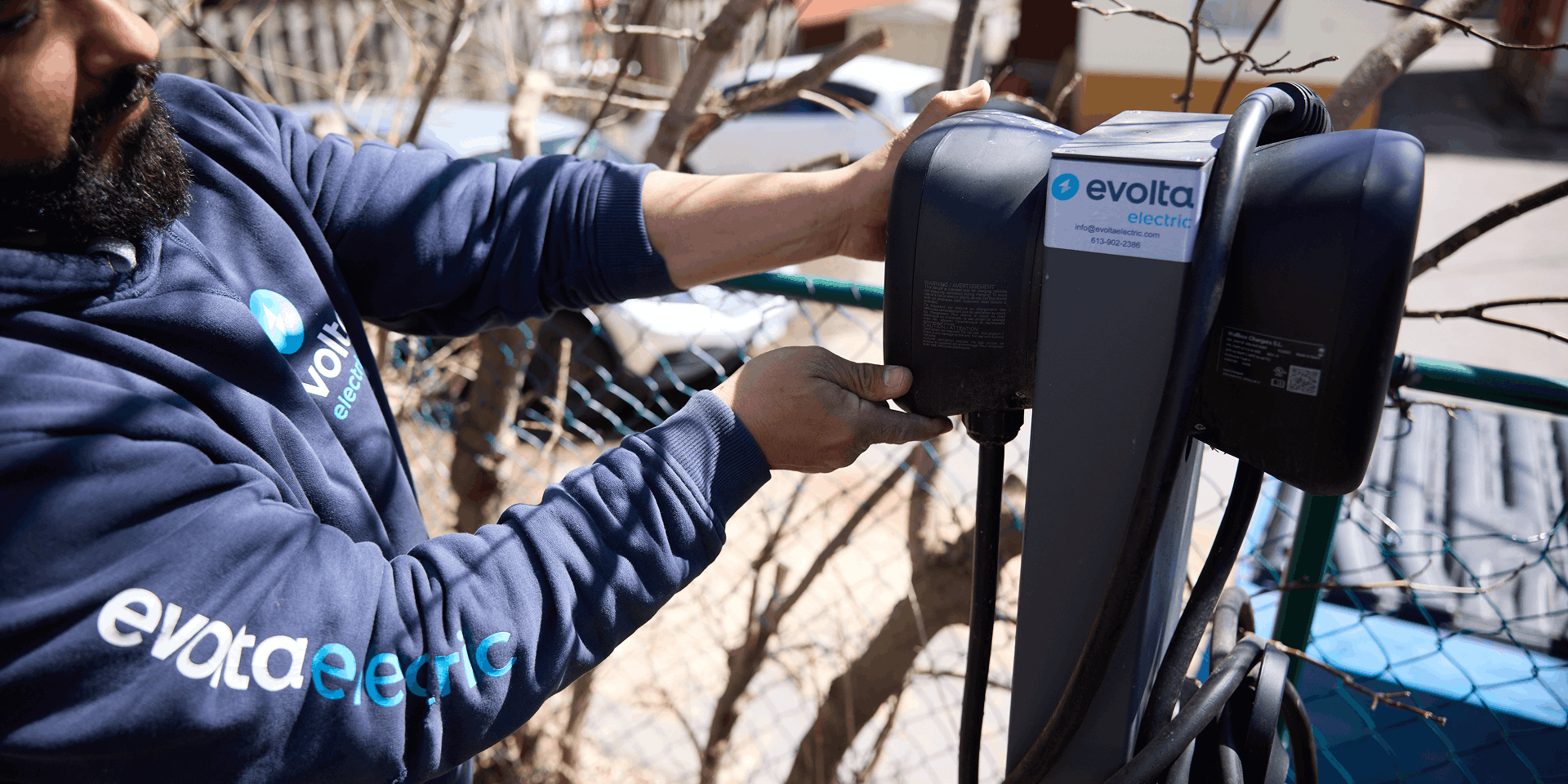
Installing a Level 2 system requires a licensed electrician. At Evolta Electric, we handle everything from initial assessment to installation. We review your panel capacity, wiring layout, and code requirements to ensure a safe and reliable setup.
In our experience, this level of charger suits most EV owners in Ottawa, especially those with longer commutes, larger battery packs, or multiple drivers in the household.
Level 2 systems are also commonly used in workplaces and multi-unit residential buildings, where vehicles are parked for longer periods during the day.
Level 3 EV Chargers: Fast Charging for Commercial Use
Level 3 chargers, also referred to as DC fast chargers, are significantly more powerful than Level 1 or Level 2 systems. Rather than using alternating current, Level 3 chargers deliver direct current at high voltage—often 400 volts or more—enabling rapid energy transfer.
Under the right conditions, many electric vehicles can be charged up to 80 percent in just 20 to 40 minutes. This speed makes Level 3 ideal for commercial applications or high-traffic public charging stations.
These systems are not suitable for residential use. They require specialized equipment, high-capacity electrical infrastructure, and often utility coordination. As part of our commercial services, Evolta Electric works with businesses and property managers to install high-capacity charging stations that meet these technical and regulatory demands.
It’s also important to note that frequent use of fast charging can affect long-term battery health. For daily use, we typically recommend Level 2, with Level 3 reserved for longer trips or fleet operations where time is critical.
Comparing the Charging Levels
Understanding the real-world differences between the three charging levels can help clarify which one is best for your needs.
Installation and Cost Considerations
The cost and complexity of installation vary with each charger level.
- Level 1 chargers use standard outlets and don’t require installation.
- Level 2 installations typically cost between $1,200 and $2,500, depending on factors such as distance from the panel, required permits, and charger model.
- Level 3 systems can cost $50,000 or more and are best suited for commercial applications where high-volume use justifies the investment.
Our team helps clients understand the full scope of their installation needs, including whether panel upgrades or trenching are required. We also assist in identifying rebate programs and government incentives available to homeowners and businesses in Ottawa.
By working with an experienced installer, you can avoid common pitfalls and ensure your system meets current safety and electrical code standards.
Which Charger Is Right for You?
For many of our residential clients, the decision comes down to how often and how far they drive.
- If your vehicle is a plug-in hybrid or you drive only short distances, Level 1 might be adequate.
- If you want the convenience of overnight charging or have more demanding daily needs, Level 2 is often the best choice.
- For commercial properties, retail centres, or fleet vehicles that need quick turnaround times, Level 3 may be required.
We’ve helped hundreds of homeowners in Ottawa install reliable EV charging systems tailored to their unique situations. Whether you’re installing an EV home charger for the first time or expanding infrastructure to include multiple ports, the key is choosing a solution that fits both your present and future needs.
Conclusion: Choosing the Right EV Charger
Selecting between Level 1, 2, and 3 EV chargers is about more than just charging speed—it’s about matching the right system to how you live and drive.
Level 1 works as a starting point for light users.
Level 2 offers an efficient, long-term solution for daily drivers.
Level 3 is best reserved for commercial properties or public installations where fast turnaround is essential.
At Evolta Electric, we specialize in EV charger installation across Ottawa, offering expert service for both residential and commercial properties. From the first consultation to final inspection, our licensed electricians deliver safe, code-compliant installations built for performance and reliability.
If you’re considering a new EV home charger or planning a larger electric charging station installation, we’re ready to help. Contact us today.